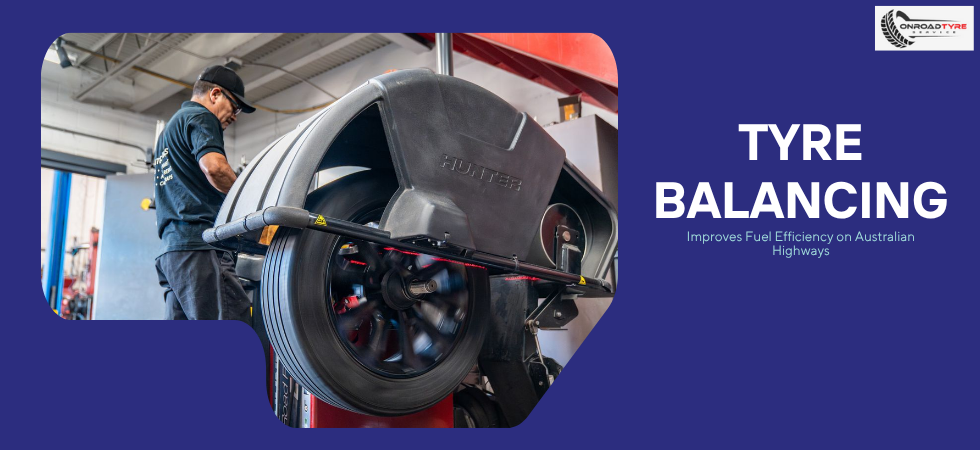
Why Tyre Balancing Improves Fuel Efficiency on Australian Highways
When you’re driving long distances across Australia’s highways—whether it’s the Hume, the Pacific, or the Stuart Highway—fuel efficiency becomes a major priority. With the rising cost of fuel and the demanding conditions of Australian roads, keeping your vehicle running smoothly is more important than ever. One of the most effective yet often overlooked services that helps maximise fuel efficiency is tyre balancing.
At ONROAD Tyre, we regularly assist motorists who experience unnecessary fuel loss, tyre wear, and vibration issues simply because their tyres are not properly balanced. In this blog, we’ll explore how tyre balancing works, why it impacts your fuel economy, and how related services like tyre balancing, alignment, and rotation play a major role in keeping your vehicle efficient and road-ready.
What Is Tyre Balancing?
Tyre balancing ensures that the weight of each wheel-and-tyre assembly is evenly distributed around its axis. Even tiny differences in weight—caused by manufacturing variances, uneven wear, or minor damage—can lead to imbalances.
These imbalances create vibrations, especially at higher speeds, and make the tyres spin unevenly. Over time, this leads to:
- Excessive tyre wear
- Uneven tread patterns
- More strain on the engine
- Lower fuel efficiency
In short, balanced tyres = smoother driving + better fuel economy.
How Tyre Balancing Improves Fuel Efficiency
Most Australian drivers don't connect tyre issues with fuel usage, but tyre balancing has a direct and significant impact on how much fuel your vehicle consumes.
Here’s how:
1. Less Rolling Resistance = Less Fuel Consumption
When tyres are imbalanced, they create uneven rolling resistance. Your engine has to work harder to keep the car moving forward, which means it burns more fuel.
Balanced tyres roll smoothly, reducing the resistance against the road.
2. Reduces Engine & Drivetrain Strain
Every vibration created by imbalanced tyres sends extra stress through the steering and suspension systems. This makes the engine work harder, especially during highway driving at consistent speeds.
A smoother ride means your car runs more efficiently and consumes less fuel.
3. Prevents Uneven Wear That Leads to More Fuel Usage
Uneven tyre wear increases friction between the tyre and the road. With irregular tread patterns, your tyres grip the road inconsistently, forcing your engine to compensate.
Balancing prevents uneven wear, ensuring the tyres maintain consistent contact with the road.
4. Improves Aerodynamics at High Speeds
On highways, even small vibrations disturb your car’s aerodynamic stability. When tyres wobble, they disrupt airflow around your vehicle, slightly increasing drag—especially at 80–110 km/h.
Proper tyre balancing helps maintain your car’s intended stability and aerodynamics.
5. Helps Maintain Correct Tyre Pressure
Imbalanced tyres often lose pressure faster due to irregular wear. Low pressure is one of the biggest villains when it comes to fuel consumption.
Balanced tyres maintain pressure longer and keep your fuel mileage optimal.
The Australian Highway Factor
Australia’s long-distance routes have unique conditions that make tyre balancing even more crucial:
- High heat during summer increases tyre expansion and imbalance.
- Long stretches of highway driving amplify the effects of even minor imbalances.
- Uneven road surfaces in rural areas accelerate tyre wear.
- Heavy loads during travel or interstate trips create more strain on tyres.
For these reasons, Australian highway drivers should treat tyre balancing as a regular maintenance priority rather than a once-off service.
How Tyre Balance and Alignment Work Together
Many people confuse tyre balancing with wheel alignment, but both services complement each other and improve fuel efficiency when done together.
Tyre Balance and Alignment Combined Offer:
- Smoother handling
- Reduced tyre drag
- Even tyre wear
- Better mileage on highways
- Improved safety at high speeds
Alignment ensures your wheels are positioned correctly relative to the road and each other, while balancing ensures they spin evenly without vibrations.
If one is incorrect, the other often becomes affected. That’s why ONROAD Tyre recommends getting both checked regularly—especially if you frequently drive across Sydney, New South Wales, or any of Australia’s major long-distance routes.
Why Tyre Rotation Also Matters for Fuel Efficiency
Another essential service linked to tyre life and fuel usage is tyre rotation.
Tyre rotation involves switching the positions of your tyres (front to back, side to side) so they wear evenly. This is especially important because:
- Front tyres wear faster on front-wheel-drive cars
- Rear tyres wear differently on utes and SUVs
- Highway driving patterns can cause more wear on one side
How Tyre Rotation Boosts Fuel Efficiency
- Promotes even tread depth
- Reduces rolling resistance
- Prevents premature tyre replacement
- Enhances vehicle stability
When your tyres wear evenly and maintain consistent traction, the engine doesn’t have to overwork—resulting in smoother and more fuel-efficient driving.
For best results, ONROAD Tyre recommends rotating your tyres every 12,000–15,000 km, especially if you regularly drive on highways.
Signs Your Tyres Need Balancing
If you experience any of the symptoms below, it’s time to schedule a tyre balancing session:
- Vibrations in the steering wheel at 70–110 km/h
- Uneven or patchy tyre wear
- Vehicle pulling to one side
- Loud tyre noise at high speeds
- Decreased fuel efficiency
- Steering is becoming heavier or shaky
Ignoring these signs can cost you more in the long run—not just in fuel, but in tyre replacement and mechanical repairs.
How Often Should Australians Get Their Tyres Balanced?
For highway drivers in Australia, tyre balancing is recommended:
- Every 15,000 km, or
- Every time you rotate your tyres, or
- Whenever you install new tyres, or
- After hitting a pothole or road debris, which is very common on rural and suburban routes
Considering the vast distances Australians travel, regular balancing is one of the simplest and most cost-effective ways to save money on fuel.
Conclusion: Small Service, Big Savings
Tyre balancing may seem like a minor part of vehicle maintenance, but it plays a huge role in reducing fuel consumption—especially on long Australian highways. By ensuring your tyres roll smoothly and wear evenly, you get:
- Better fuel efficiency
- Improved safety
- Longer tyre life
- A smoother driving experience
- Reduced costs on repairs and fuel
At ONROAD Tyre, we provide expert tyre balancing, tyre balance and alignment, and tyre rotation services designed specifically for Australian driving conditions.